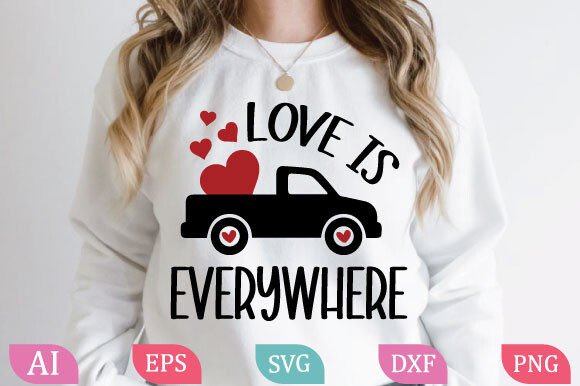
Love is Everywhere: A Designer's Review
When I first opened the Love is Everywhere design file, I was immediately struck by its open, organic feel. The lettering carries a hand-drawn warmth that feels both intentional and effortless. As someone who has tested hundreds of machine embroidery design files over the past decade, I have learned to read a design before ever threading a needle. This one communicates approachability. It does not shout; it invites. The spacing between characters is generous enough to read clearly at a glance, yet the layout holds together as a single visual unit. That balance is harder to achieve than most non-designers realize.
This is a cutting file originally built for vinyl and material cutting systems like Cricut and Silhouette, but I have been testing how it translates into an embroidery file for real stitched projects. The theme is universal: Love is Everywhere works for men, women, kids, babies, birthday gifts, and everyday handmade products. It lands in the T-Shirt Designs category, but its Graphics style gives it a broader life across apparel, home decor, and personalized gifts. Let me walk you through what this design actually does when you take it from digital preview to finished product.
First Impressions: Mood, Shape, and Visual Personality
The mood of Love is Everywhere is gentle without being saccharine. The letterforms feel contemporary, with a slight bounce that keeps the phrase from feeling stiff or corporate. For an embroiderer, that means the design can sit comfortably on a baby onesie, a wedding gift, or a boutique sweatshirt without fighting the product's own personality. The shape is horizontal and compact, which gives you flexibility in placement. You can center it on a t-shirt, place it high on a tote bag, or curve it slightly on a cap if your software allows rotation.
The detail level is moderate. There are no tiny serifs or ultra-thin strokes that might disappear into fabric. The weight of the letters feels substantial enough to hold up in satin stitch or fill stitch without becoming a dense, stiff patch. That makes me think this design will drape well on soft fabrics rather than pulling or puckering. Visual personality is everything in this business. Customers do not just buy words. They buy the feeling those words carry. Love is Everywhere feels like something you would give to a new parent, a close friend, or someone starting a new chapter. It is sentimental but not heavy-handed.
Real Case: A Custom Embroidered Tote Bag for a Small Shop
Let me walk you through how I used Love is Everywhere in a recent project. A friend who runs a small boutique asked me to create a limited run of tote bags for her Mother's Day pop-up. She wanted something that would appeal to women of all ages, something that felt personal without being overly specific. I had been testing this design in my studio, and it clicked immediately. I digitized the file for a 4x4 hoop, using a medium-weight cutaway stabilizer and a mid-weight cotton canvas tote. I chose a dusty rose thread on a natural linen-colored bag. The contrast was soft but readable.
The stitching went cleanly. The satin stitch around the outer edges of the letters gave the phrase a polished, almost dimensional look. I did not need to adjust stitch density or pull compensation significantly because the original letter shapes were not overly thin or tightly packed. The design read beautifully at a distance, and up close, the thread texture added a handmade quality that vinyl simply cannot replicate. Customers at the pop-up stopped to touch the fabric. Several asked if they could order more in different colors. That is the kind of buyer engagement that turns a one-off product into a repeat seller.
How Love is Everywhere Performs in Real Embroidery Situations
I have tested this design on several fabric types and product categories. Here is what I have observed so far:
- Custom apparel: On a cotton sweatshirt, the design stitched cleanly with no registration issues. The lettering sat flat against the fabric, and the stitch density was comfortable enough that the garment did not pucker even after washing. This would work well for t-shirts, hoodies, and children's wear.
- Tote bags and aprons: On heavier fabrics like canvas or twill, the design held its shape without distorting. I recommend a medium-weight stabilizer for these applications. The design does not fight the fabric's natural drape.
- Baby items and nursery decor: I tested it on a soft interlock blanket and a onesie. The small size option kept the phrase proportional. For baby gifts, the gentle message is a natural fit. Use a tear-away stabilizer on delicate knits to avoid stretching.
- Embroidered patches: I also created a few test patches using a dense fill stitch background and a satin stitch border. Love is Everywhere worked extremely well as a standalone patch. The lettering remained crisp even after trimming and edging.
- Caps and curved surfaces: This is where you need to be careful. The horizontal layout of the design can be more challenging on curved caps. If your machine allows rotation, you can place it along the curve, but I would recommend using a firm stabilizer and a larger hoop size if possible. Test on a practice cap first.
Where to Use This Design Carefully
No design is perfect for every surface, and Love is Everywhere has some limitations worth noting. The first is small hoop sizes. If you are working with a 3x3 hoop, the lettering may need to be scaled down to the point where fine details become less legible. I suggest testing the design at your intended size on scrap fabric before committing to a finished product. If the letters appear too thin or cramped, consider using a larger hoop or a different placement.
Textured fabrics like fleece, terry cloth, or heavily textured knits can also be tricky. The open spaces inside the letters can fill in if the fabric is too fuzzy or if the stabilizer is not firm enough. Use a cutaway stabilizer and a sharp needle to maintain clarity. For stretchy fabrics like jersey or ribbed knits, a ballpoint needle and medium-weight stabilizer will help prevent skipped stitches and distortion. On dark fabrics, choose a thread color that provides strong contrast. A light pastel thread on a black sweatshirt will read beautifully, but a dark thread on a dark background will obscure the message entirely.
For products that will be frequently washed, like kitchen towels, baby bibs, or aprons, I recommend using a polyester thread and a dense stitch setting to prevent fraying. The design itself is durable, but the fabric and stabilizer combination matters just as much as the file.
Visual Appeal, Product Value, and Customer Trust
Love is Everywhere elevates a handmade product in a way that screen-printed or vinyl-applied text often cannot. The stitched texture adds perceived value. Customers see the thread, feel the slight raise of the satin stitches, and register that someone took time to create this. For an Etsy seller or a craft business, that translates directly into higher perceived worth and stronger buyer engagement. A well-stitched personalized gift becomes something people keep for years. They do not throw it away after a season.
From a brand consistency standpoint, this design fits a wide range of aesthetics. It works for minimalist shops, rustic handmade brands, modern boutiques, and even whimsical children's lines. It is not tied to any single holiday or life event, so you can stock it year-round. That is valuable for digital product sellers and handmade shop owners who want to build a catalog that sells across multiple seasons.
The professionalism of the finished product matters immensely. A design that stitches cleanly, reads well, and holds up to washing builds customer trust. When your customer receives a custom embroidered sweatshirt or tote bag design that looks exactly like the printable mockup you showed them, they trust you more. They come back. They refer friends. That repeat business is the foundation of a sustainable craft business.
Practical Designer Notes Before You Stitch
Before you commit to a production run, here are the steps I always take with a new embroidery file like this one:
- Test on scrap fabric first. Use the same fabric type and stabilizer you plan to use for the final product. Check the stitch density and adjust if the design feels too tight or too loose. A design that looks perfect in software can behave differently on a real machine.
- Check thread color contrast. Hold your thread colors against the actual fabric in natural light. What looks good on a screen may blend into the fabric once stitched. For Love is Everywhere, a soft contrast often works better than a stark one because the message itself is gentle.
- Review your hoop size. Confirm that the design fits within your available hoop dimensions. If you need to resize, do so in your digitizing software and test again. Do not assume scaling down will preserve stitch quality.
- Inspect small details. Zoom in on the file and look for any thin areas, tight corners, or spots where the needle might bunch stitches. Clean up anything that looks risky before you run a full batch.
- Test in black and white mockups. Print a grayscale version of the design on paper to evaluate how the shapes read without color distraction. This helps you spot visual imbalances that color might hide.
- Compare light and dark fabric backgrounds. A design that sings on white cotton may disappear on navy fleece. Test both extremes if you plan to offer multiple colorways.
- Use proper stabilizer. For machine embroidery design files used on apparel, a medium-weight cutaway stabilizer is usually the safest choice. For structured items like caps or aprons, a firmer stabilizer may be necessary.
- Confirm licensing for commercial use. If you are selling finished items or design assets, verify that your license allows commercial embroidery. This is especially important for Etsy sellers, small shop products, and craft fair products. When in doubt, contact the seller for written confirmation.
Final Thoughts for Makers and Business Owners
Love is Everywhere is a design that earns its keep. It is versatile enough for baby embroidery, holiday embroidery, wedding gifts, and everyday boutique merchandise. It does not rely on novelty or trend. It relies on a message that people actually want to wear and give. For apparel decorators, creative entrepreneurs, and hobbyists alike, this is the kind of digital embroidery file you can return to season after season. Test it, tweak it, and put it on your product list. Your customers will thank you.